The Araucanía region of Chile – indigenous heartland
When the Spanish arrived in Chile, the indigenous Mapuche tribes occupied a large area of territory between Limarí River in the region of Coquimbo in the north of Chile, to the Island of Chiloe, some 1690km (1050 miles) to the south, and from the coast to the mountains east west to east. With the arrival of the spanish, there were various migrations, including crossings of the Andes mountain range into what is now Argentina.
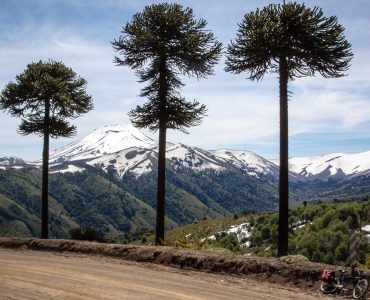
In the region of the Araucanía the Pehuenche/Pewenche and Puelche people were hunters and gatherers that depended on animals such as the Ñandu and Guanaco plus the seeds from the emblematic and sacred Araucaria tree.
Mapuche, inclduing Pehuenche, society was and still is organised by families, or “Lof”. The head or “Lonko” of each family met with other Lonkos to choose a military chief for the particular battle of military operation in question.
It is said that one of the reasons why the Mapuche managed to successfully resist the invaders for so long (some 400 years), was this social organisation that did not depend on just one strong leader.
Around 1870, the colonists advanced south of the Bio Bio River and confiscated Mapuche territory. Until today the loss of territory and the destruction of their culture is a cause for much angst and sometimes protests and resistance actions.
In the city of Temuco one can visit the cultural museum where the history of the Mapuche is presented, as well as in the Pre-Columbian Museum in Santiago, below the Moneda (Parliament House).
Visiting the area around Volcano Lonquimay and the city sharing the same name, one can encounter many descendents of these brave warrior people. Many families are integrated into society, many that once relied on subsistence agriculture are embracing tourism and offer tours and local foods.
As a tourist, one can help the local Pewenche people and learn from them about the Mapuche culture and their personal histories by taking their tours, buying their handicrafts and chatting to them. Just one note, remember to avoid buying the fruting bodies of the Araucaria tree in the months of January and February as the fruits are not ready and people try to knock them off the trees in order to make money from tourists in those months before they are naturally ready to drop from the tree. This action can damage the trees which are extraordinarily slow growing and are listed as Endangered by the IUCN (International Union for the Conservation of Nature).